My Mother Paid Me To Skip My Sister’s Wedding — She Never Asked Who Owned The Room
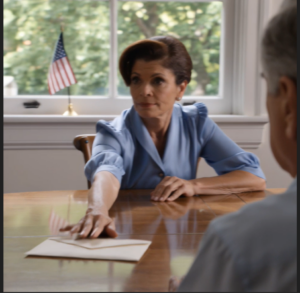
My mother pushed the envelope across the kitchen table with two fingers. The way you slide a plate back at a restaurant.
“500,” she said. “Take it and skip the wedding. Thea, Martin’s people are polished. You’d walk into that room and show them exactly what we are.”
My father sat 3 ft from her with his palm flat on the wood to hold himself upright, and he turned his face toward the window. He built that table the winter I turned nine.
Behind her, taped to the refrigerator at eye level, was the guest list. 91 names in a column. Mine was on line 14 with a single blue line drawn through it.
Ruler straight. The way you cross out a mistake you don’t want anyone to think you agonized over. My sister’s handwriting. She’d done it days ago. My mother had only come to deliver the news with a price on it.
“Karen’s already cried about this once,” my mother said. “You want her crying in her own pictures?”
“I’d like to go to my sister’s wedding.”
“To wear what?”
One syllable of laugh, no air in it.
“You’ve lived like a student for 8 years. Beverly Hail has a house with two staircases. You want to stand next to that woman and let her ask you what you do?”
My father’s chest moved in that shallow, stacked way it had moved since spring. Three breaths where one used to go. 66 years old, a cabinet maker’s forearms and a heart valve that had closed down from the size of a quarter to something nearer the hole in a shirt button.
“Your father agrees with me,” my mother said. “Don’t you, Walter?”
He kept his face at the window. He nodded once. It was the smallest thing I have ever seen a man do.
Three things taken off me in 4 minutes, all of them countable. My seat, my name on line 14, and then him.
I looked down at the envelope to keep my face still, and that was when I saw what it was. Not a card envelope—a long window envelope with a return address printed in the corner.
St. Brendan’s Regional Patient Financial Assistance.
Somebody had torn the top open along a crooked line, shaken out whatever came in it, and put $500 in cash back inside. My father’s name showed through the little plastic window.
Walter J. Ingram.
She was paying me to disappear out of the envelope that paid for his heart.
On the counter stood an amber pill bottle with his name on it. I could read the fill date from where I sat. April 2nd. It was the 27th of August, and the bottle was full to the shoulder.
“Okay,” I said.
Her chin came up. She’d loaded herself for a fight, and I hadn’t given her one, and for a second she looked cheated.
“Okay, thank you.”
I folded the envelope once and put it in my bag.
“Would you write something on it for me first?”
“Write what?”
“Just ‘gift,’ today’s date. And your name?”
She stared.
“You’re going to keep a record of $500.”
“Dad taught me.”
I slid it back across the oak.
“Measure twice, sign once.”
My father didn’t move.
My mother made a sound in her throat, opened her purse, and took out a pen to shut me up faster. It was his pen. A fat black Estherbrook with a hairline crack in the cap, which had lived in the same kitchen drawer my entire life and now lived in my mother’s handbag, clipped to a checkbook.
Warm from her bag, she wrote, “Guug 27 2026,” and under it, “Denise Ingram,” in that loose forwardleaning hand she’d had since high school, and pushed it back and said, “Happy?”
“Yes.”
My father’s mouth moved. Nothing came out of it. I stood up.
“See you around, Dad.”
“Thea,” he said, just my name.
He didn’t finish it.
I sat in their driveway with the engine off and did arithmetic instead of crying. The rehearsal dinner was 15 days out. I only needed 12.
On the 12th day, a woman in a gray suit was going to stand on that porch and ask my mother to spell her own name, and my mother was going to spell it out loud, all the way to the end, and it would be the first mistake she ever made in front of a witness.
I put the envelope in the glove box with the flap up so the ink wouldn’t smear.
My name is Thea Ingram. I’m 31. If a story about a family table has ever gotten under your skin, stay with me. This one runs 15 days, and it ends somewhere I could not have written on purpose.
And if you’ve got a father who says he’s fine, tell me about him down in the comments. I’d like to know I’m not the only one who learned to read a man by what he won’t say.
The next morning, I was parked two houses down with a coffee going cold when the mail truck came up their street. My mother came out in her robe with her hand already out.
The carrier said something and shook his head. She said something and put her hand out again. He tucked the envelope under his arm, wrote on a yellow slip, and held the slip out to her instead.
And my mother stood on her own porch, in front of a stranger in a uniform, and was told no by a man who had no idea who she was.
She looked at the slip. She looked up the street and down it.
90 seconds later, my father came out in his good shirt at 8:15 in the morning, got into the passenger seat, and she drove him to the post office to sign for a letter she wasn’t going to let him read.
That cost me $11.
Certified mail restricted delivery is a service almost nobody uses anymore. It means the carrier may not hand the envelope to a spouse, a neighbor, or a helpful daughter standing on a porch in a robe. It goes to the address eee. There’s a green card and a signature line, and the carrier has no discretion at all.
I had not broken into anything to make that happen. I’d sent one email the night before from a parking lot to a woman named Adele Sanger in patient financial services at St. Brendan’s, asking for two things: that all correspondents on my father’s assistance file go out restricted delivery from here forward, and a dispersement trace on grant 4412.
There are things you are allowed to ask for and things you aren’t, and most people get that line wrong in both directions. I was not allowed to open my father’s mail. I was not allowed to call his cardiologist.
But grant 4412 was money the Bellwood Fund had been putting into St. Brendan’s patient assistance pool for eight straight years. And I am the person who signs the Bellwood Fund’s checks.
And a fund that gives a hospital money is entitled to know where the hospital sent it. That is not a favor. That is a line item.
I let them drive off and did not follow.
The pen was the thing I couldn’t put down, though. All the way back to the office, I kept seeing it come out of her bag. My grandfather gave my father that pen when he finished his apprenticeship. My father signed his first mortgage with it.
When I was 18, he put it in my hand and stood behind my chair while I practiced my own signature on the back of a lumber receipt over and over until it stopped looking like a child’s. And he said the thing he always said about a joint, which was that you only get one chance to be honest about a measurement.
He would not have handed that pen to anybody. Not for a grocery list, not for a birthday card, which meant it had not been handed over.
It had been taken at some point. The way you take a thing from a man who has stopped believing he’s entitled to object.
That is the whole reason I let my family believe what they believed about me for eight years. Every dollar I ever put in my father’s hand came back to me unopened.
He did it kindly. He did it with a joke once about how he had a bad back but not that bad. The third time he didn’t joke.
And I understood that being helped in front of himself was going to cost him more than the money was worth, and that if I wanted to keep him, I would have to give in a way that never had my name on it.
So I gave the way that never had my name on it.
And for eight years, my family got to have a daughter who couldn’t afford a coat, which turned out to be the most useful thing about me.
At noon, I sat in the back of a production meeting I had no reason to attend because I wanted to be in a room where nobody was ashamed of me.
Hollis Vance runs the front of my company. She’s 44. She talks to clients. Her photograph is on the website. Mine is not.
That was the arrangement from the first year, when I was 23 with $11,000 and a lease on a building with a cavedin porch. And it stayed the arrangement because it worked and because it let me be inside my own family exactly the daughter they had already decided I was.
Larks House Group operates three properties: a converted mill on the river, a garden pavilion on the north side, and Halloway House, an 1890s estate with a walnut dining room that seats 60 and books 14 months out.
Hollis went down the calendar.
“September 11th, Halloway, dining room, rehearsal dinner, party of 38. Cancellation back in July,” she said. “We filled it in 6 weeks. Hail and Ingram.”
I wrote the number 38 on the corner of my legal pad and drew a box around it, and nobody in that room looked up because there was no reason on earth for anybody to look up.
Adele Sanger’s report came back Monday morning, and it was four pages long, and it was the most boring document I have ever read with my hand shaking.
A grant fund doesn’t get patient records. It gets its own money back in the shape of a spreadsheet.
8 years of Bellwood dispersements against Grant 4412. Dates and amounts, no diagnosis, no notes. The first 6 years were clean and dull and made me feel like a person who worries too much.
2,000 here, 5800 there. Applied to patient account, applied to patient account, applied to patient account.
Then, in March of 2024, one line changed.
Method of dispersement: reimbursement to authorized representative.
After that, every payment left the hospital as a check made out to a person instead of a credit against a bill. Nine payments, $61,400 over 29 months, sent to a mailing address that was my parents’ house and endorsed by somebody into an account I had no right to see.
There was a footnote. Adele had put it in because she is thorough and because she had no idea what she was handing me.
Change of method executed under signed representative authorization on file. February 2024.
Durable power of attorney added to file. April 2026.
I read it twice and then a third time with a pen in my hand.
My father had never signed a representative authorization in his life. And my father did not have a power of attorney. My father had a fireproof box in the linen closet with his discharge papers and his mother’s death certificate in it.
And he had told me twice, once when he was 60 and once in a hospital corridor in March, that he wasn’t ready to sign anything like that yet. That he’d know when he was ready. That a man knows.
Underneath the footnote, there was one more table, and this one had nothing to do with money.
Scheduled services not rendered against the covered account. 2026: March 12th, May 7th, August 19th. Cancelled by telephone.
March 12th was 4 days after a Bellwood payment cleared. So was May 7th. So was August 19th.
The Bellwood money only ever paid for one thing at that hospital. And it was not dentistry.
Somebody had been picking up a telephone and turning off my father’s appointments within a week of the money landing. Three times in a year when his valve was closing.
I got up and walked to the window of my office and stood there long enough that Hollis knocked on the glass and mouthed, “Are you okay?”
And I gave her a thumbs up because there was nothing she could do and because I had already started counting again.
The 6 years of clean lines were the part that hurt worst, if you want to know. For six years, the money went where it was supposed to go. And my father got his cardiology and his medication and his echo cardiograms and never once asked the hospital why a fund he’d never applied to kept covering him.
He’d been told it was a hardship program. He believed it the way he believed the county was generous.
And every single year, the Bellwood Award letter went out to the household on the same date because I set the dispersement calendar myself: on the 9th of March.
At the time, I thought I was being sentimental in a way nobody would ever notice.
My sister called that afternoon.
“So, you’re being reasonable,” Karen said. “Mom said you were reasonable.”
“How’s the dress?”
“It’s fine. It’s—listen.”
A pause with a wall in it.
“The shower’s Saturday at Aunt Laura’s. It’s a small thing. Beverly’s people are coming, and it’s really just a small thing.”
I put my pen down.
“You want me not to come to that either.”
“Don’t make it like that.”
“How would you like me to make it?”
“Thea, you always do this. You get quiet, and then everything I say sounds terrible.”
She exhaled.
“It’s 4 hours. It’s not about you.”
“Okay,” I said. “Congratulations, Karen. I mean that.”
She hung up before I did, which I think she needed.
Aunt Laura is my mother’s older sister. She has collected my parents’ mail off the porch every day for 2 years because she walks past at 9 and because my mother told her my father gets confused by envelopes.
I wrote one word on a legal pad and drew a box around it the way I’d done with 38.
April.
Because whoever had signed that power of attorney had done it in April. And I could think of exactly one thing that happened to my father in April. And it was that on the 31st of March, he had a colonoscopy under sedation and came home groggy enough that my mother had to walk him from the car.
The county recorder’s office is on the second floor of a building with a broken elevator and a laminated sign that says, “Cash or check only.”
And I want to be very clear about what I did there on Wednesday morning because people hear the word evidence and imagine something with a lock on it.
I stood in line behind a man buying a plat map. I gave a clerk an address, 22 Fenner Road, and Nina. She printed what was recorded against it and stamped each page with a raised seal that you can feel with your thumb.
That’s it. Anybody can do it. Anybody in this country can walk into that office and find out what has been done to a piece of land.
And the reason almost nobody does is that it never occurs to us that the thing being done is being done to our own father.
22 Fenner Road is the house I grew up in. My father inherited it from his father in 1994 and never retitled it, which drove my mother crazy for 30 years and which turned out, in the end, to be the only piece of luck in this entire story.
The deed says one name: Walter J. Ingram.
Recorded against it on July 6th, 2026: a home equity line of credit, 103,000.
And attached behind it, because the law requires it when somebody signs for real property on another person’s behalf, was a durable power of attorney dated April 2nd, 2026.
Principal: Walter J. Ingram. Agent: Denise M. Ingram. Notorized by Raymond A. Puit. Commission number on the stamp.
My mother’s first cousin, who sells insurance out of a strip mall and does not work at the desk by the door.
Witness line one: Karen A. Ingram.
I sat in my car in a municipal lot with the engine off and the pages on the passenger seat. And I did the thing I had been putting off since Thursday, which was to take the 500 out of the glove box and lay my mother’s handwriting next to my father’s signature.
Here is what I expected. I expected the forgery to be obvious because, in my head, forggers are clumsy and justice is easy.
It wasn’t obvious. It was good.
The W was right. My father makes his W with a hitch in the second peak. A tiny hesitation, the place where his hand catches. Whoever wrote that had the hitch.
I sat with that for a long time. Then I told myself what anybody would tell themselves, which is that a woman who has watched a man sign for 39 years learns his hand better than he does.
I put the pages in a folder and drove back to work and did not say one word to anybody. And that night I slept for 4 hours and woke at 2 in the morning perfectly calm, which is not the same thing as being all right.
By Thursday, I had the shape of it, and I could prove all of it but the last piece: that someone had turned off my father’s heart appointments three times in one year. That someone had changed the way his charity money was paid so it would leave the building as cash.
That someone had put a $103,000 line of credit on the house he was born in and drawn 84 of it, and that all of it ran through one piece of paper signed on a morning when my father could not have safely driven a car.
What I could not prove yet was the last piece, which was where $84,000 goes.
I found out at 11 the next morning, in my own dining room, from a man who had no idea he was telling me anything.
Halloway House has a walnut dining room, a service corridor that smells like beeswax, and a rule I wrote myself in 2019 after a father of the bride disappeared with an unpaid balance of $19,000.
Whoever is on the contract as payer of record shows up in person before service with a photo ID and signs the final release at the property. Couples hate it. We keep it anyway.
Thursday morning, the groom came to walk the room, which grooms almost never do, and Hollis was at the mill. And so, the person who met him in the front hall wearing a badge that said “staff” was me.
Martin Hail is 29 and taller than he knows what to do with. He shook my hand and apologized for being early and then apologized for apologizing.
“Are you the coordinator?”
“I work in the office,” I said, which was true in the way a floor is a surface.
He walked the length of the walnut table with his hands in his pockets.
“It’s a lot of room,” he said. “Honestly, it’s more than we—”
He stopped.
“My fiance’s mother handled it.”
“Mrs. Ingram, Denise?”
“Yeah.”
He touched the back of a chair.
“She wouldn’t let us pay for anything. My mom offered twice. She wouldn’t hear it. She said—”
And he laughed, embarrassed for somebody.
“She said, ‘The Ingrams don’t take.’”
I stood by the window with my hands behind my back and let him keep going because people who are uncomfortable in a big room will fill it.
“She said they’d freed up some equity, like a line on the house or something. I don’t really know how it works.”
He shrugged.
“I did think it was a lot. Karen wanted the mill, actually, the smaller one. And Denise said, ‘No, this one because the one people know.’”
“And her father,” I said, “is he involved in the planning?”
Martin’s face did a thing. Not much. A half second of the specific look people get when they’ve noticed something and been told not to.
“Walt, it’s great,” he said. “He’s quiet. He’s a cabinet maker.”
“I know.”
“I keep asking him about it. He kind of—”
Martin made a gesture, a hand going down and away.
“He says it’s not much.”
“Has he been to any of it?”
“He came to the tasting.”
Martin thought about it.
“He sat down a lot. Denise said he’s got a thing with his back.”
A thing with his back.
“And there’s a sister, right?” he said. “Older sister. Karen doesn’t really talk about her.”
I looked at him, and I thought about lying, and I found that I couldn’t be bothered.
“What have you been told about the sister?”
He had the grace to go red.
“Denise said she’s—that she’s not well, that she has some problems and she gets fixated, and it’s better not to. Which, look, my family’s got two of those. So—”
He shrugged again.
“It’s nobody’s business.”
There it was. Not a slap, a file note.
Somewhere in the Hail House, in some kitchen with two staircases, my mother had built me a small, tidy explanation with a diagnosis in it, so that if I ever turned up on their doorstep with a folder in my hand, the folder would arrive pre-answered.
That’s what $84,000 had bought. A room people know, and a story about a daughter who gets fixated.
“Mr. Hail,” I said, “the dining room’s yours on the 11th from 6. The pair of records signs the final release here at the house before we open the doors. It takes four minutes.”
“Sure. Is that—that’s normal?”
“It’s in every contract we write.”
“Denise asked about that,” he said, brightening. “She asked if it could be handled over email. She said she’d be in the salon that afternoon.”
“It can’t,” I said. “We don’t wave it.”
He said that was fine and thanked me and asked whether the rain would matter and left.
He was, I want to say this plainly, a nice young man who was about to marry into something he could not see. And the only reason he walked out of that hall not knowing was that it was not yet the day.
I stood in that room for another minute with the light coming through the tall windows onto 60 ft of walnut. And I thought about my father’s table and how he’d planned a knot out of the oak so a 9-year-old could run her hand across it and feel nothing.
Then I went to the office and asked Hollis to flag the Halloway file. No waiver, payer present, and put me on the floor that night as house staff.
She looked at me over her glasses for about 2 seconds.
“You want to tell me?”
“Not yet,” I said.
Friday, I called my father and told him I needed help picking hinges. It was the only lie I told anybody in 15 days, and I’d do it again.
If I had said lunch, he’d have said he was fine. Hinges he couldn’t refuse because hinges made him necessary.
I picked him up at 11. He came down the porch steps holding the rail with both hands, one step at a time, resting on the second one, and he had shaved and he’d put on the shirt with the button-down collar.
We went to a hardware place on Route 9, and he stood at the cabinet hardware wall for 20 minutes and got better while he did it. His voice came back up out of his chest.
He had opinions about soft close mechanisms. He told me that a hinge you can hear is a hinge somebody on. He picked out a box of concealed sixways and put them in my cart himself.
Then we sat in a diner booth, and he ate about a third of a grilled cheese, and the color went back out of him.
“How’s the 10th?” I said.
He looked up. I said it as flat as I could.
“The tenth?”
“Your consult? Karen mentioned it.”
She hadn’t. He didn’t check.
“They moved it,” he said.
“Moved it where?”
“October.”
He turned his coffee cup a quarter turn.
“The 15th, I think. It’s better anyhow. You don’t want a thing like that right before a wedding. All the—”
He waved a hand at the whole concept of it.
“The fuss.”
“Who moved it, Dad?”
“They called the house.”
“Who took the call?”
“Your mother takes the calls.”
He said it the way you’d say your mother takes the trash out. Then, then, because he was watching my face, he added, “It’s not urgent, Thea. He said, ‘We’re monitoring.’ He said, ‘As long as I’m not passing out.’”
“Have you passed out?”
He drank some coffee.
“Dad.”
“Once in the garage. It was hot.”
He set the cup down.
“Don’t.”
There is a particular silence between two people when one of them has just decided not to say a true thing out loud. And I sat in it, and I made myself count the sugar packets in the caddy because if I had opened my mouth in that booth, I would have lost 15 days of work in about 9 seconds.
“Your sister only gets the one wedding,” he said to the window. “She’s been talking about that house since she was a kid. The one with the porch that goes all the way around.”
“Halloway.”
“That’s it.”
He almost smiled.
“Your mother pulled it off somehow. She’s—she does that. She gets things done.”
He turned back and looked at me straight for the first time all day, and his eyes were wet, and he was so ashamed I could hardly stand it.
“I know how it looked at the table.”
“Dad—”
“She’s under a lot of pressure.”
He put his hand flat on the formah the same way he’d put it on the oak.
“Don’t be hard on her. And don’t—”
His voice went. He got it back.
“Don’t put money in this, any of it. You’ve got nothing to spare, and I won’t have you doing that.”
I said, “Okay.”
He nodded, satisfied, and picked at the crust of the sandwich he wasn’t going to finish.
“I’d have liked you there,” he said, “at the dinner.”
And then immediately, because he’d allowed himself one whole sentence:
“But she’s right. It would be awkward for you. All those people.”
I drove him home. He carried the box of hinges in himself because I let him. At the porch, he stopped on the second step to rest and pretended he was looking at the gutter.
I sat in the driveway until the door closed. Then I called Hollis and told her the September 11th file was locked. No waiver, no exceptions.
And I called Adele Sanger and left a voicemail asking one question about who is required to report what.
And then I sat with my hands on the wheel in front of the house my father was born in, with $84,000 of somebody else’s spending stapled to it.
And I stopped being sad.
That is the honest word for it. I stopped being sad, and I started keeping a schedule.
Gail Merrick does elder law out of a converted dentist’s office with the chair still bolted to the floor in the back room. She’s 58, and she has the flattest voice I’ve ever paid for.
I put the recorder’s pages on her desk and the fund report and the $500 envelope in a sandwich bag. And I told her what I had and what I wanted. And she read for 9 minutes without saying anything.
“All right,” she said. “Here’s what you can’t do.”
“Go ahead.”
“You can’t file anything for your father. Not the forgery affidavit, not the police report, not a complaint to the bank. He’s a competent adult until a court says otherwise. And if you sign in his place, you become the second person in this story who signed for a man without asking him. Don’t hand them that.”
“Understood.”
“You can’t get his medical records. Don’t ask. Don’t have a friend ask. Don’t be clever. One HIPPA violation and every good thing in this folder goes gray.”
“I haven’t asked.”
“You can’t tape a conversation you’re not part of. This is a one party consent state. So, you may record yourself talking to your mother. You may not put a recorder in her kitchen.”
She turned a page.
“And you may not tell one single lie to obtain a document. Not a small one. If they can show you got any of this by deceit, every judge from here to the state line stops caring about what she did.”
“I bought public records, and I asked my own fund for its own report.”
“I noticed.”
She looked up.
“That’s the reason I’m going to help you.”
She took her glasses off.
“Now, here’s what happens if you hand this to the right desk. St. Brendan’s has compliance officers, and in this state, every one of them is a mandated reporter for suspected financial exploitation of a vulnerable adult. [snorts] That means once your report is in their hands, it stops being your decision.
“They report to adult protective services. APS opens an investigation and, on these facts, calls the county.
“A recorded power of attorney used to encumber real property, executed 48 hours after a sedation procedure, notorized by the agent’s first cousin, witnessed by the agents, and followed by an $84,000 draw. Ms. Ingram, that isn’t a family dispute. That’s a felony with three signatures on it.”
I sat still.
“The bank’s a separate animal,” she said. “The lender will freeze that line the day your father—your father, in his own hand—swears he didn’t sign. Not before. They have no obligation to a daughter.”
“He won’t.”
“Say that again.”
“He won’t sign,” I said. “He’ll say he doesn’t want to fuss. He’ll say she’s under pressure. He’ll say I’ve got nothing to spare, and he won’t have me doing this.”
Gail Merik put her glasses back on.
“Then your whole case is a very well organized pile of paper,” she said, “until the day he wants to read it, and you cannot make that day arrive.”
I asked her one more question on the way out, standing in the doorway with my hand on the frame.
“If I put it in on a particular day, is that wrong?”
She thought about it longer than I expected.
“Filing when you choose isn’t wrong,” she said. “Filing what isn’t true is wrong. You’ve got a very clean folder and a very ugly reason to want an audience. Just be sure you can say afterward that you’d have filed it anyway if nobody had been watching.”
I said I could. I meant it. I have thought about that sentence more times since than she probably intends anybody to.
I called my mother Sunday afternoon. She let it ring four times, which was a message. And then she picked up and said, “Thea,” in the voice of a woman clearing a low bar.
“I wanted to say I’m not coming,” I said. “To any of it. You were right.”
The silence had a smile in it. I could hear her sit down.
“Well,” she said, “I’m glad you thought about it.”
“I did.”
“It’s not personal, sweetheart. It’s one day. It’s Karen’s one day.”
“I know.”
“And Beverly’s family are—they’re not snobs. They’re just a certain kind of people, and you know how you get.”
“I do,” I said.
She talked for 6 minutes then, the way she does when she’s won something, and I let her, and somewhere around mine at 4 she got to house and how she’d got it. And I could hear her walking around her kitchen with the phone.
“Nobody thought I could pull that room,” she said. “14 months out. They told me 14 months. I got it in 6 weeks.”
“How’d you manage the money?”
“Don’t you worry about the money.”
“I’m not worried. I’m impressed.”
“We freed some things up,” she said. “Your father and I.”
I looked at the ceiling of my apartment.
“Mom,” I said, “one thing, since I’m not coming.”
“What?”
“Whoever pays should be the name on the paperwork. Not the couple’s name, the payer’s.”
I kept it flat, the way you read a line off a contract, because it was a line off a contract.
“If Karen’s name is the one on that file, then a year from now, when somebody asks who gave her that room, the answer on paper is going to be Martin’s mother.”
She made a sound I will hear for the rest of my life. It was pleasure.
“I am the one signing,” she said. “Karin’s got no idea what any of it costs. Beverly offered, you know, she offered, and I said, ‘No, absolutely not. This family pays for its own.’”
“Then put your name on it.”
“I will.”
“They’ll send a final guarantee and a payer authorization. There’s an account line on it.”
“I’ve got the account,” she said. “I’ve got all of it.”
“Okay.”
“Thea.”
Her voice changed a half step.
“This is good, that you’re being like this.”
“Good night, Mom.”
The form went out from our office Sunday evening. Standard, unremarkable, the same three pages we send everybody.
It came back at 9:41 Monday night with a scan of a driver’s license and a signature I recognized before the page finished loading. Loose, forwardleaning, the same hand that wrote “gift. Ag 27206” on a hospital envelope while my father looked out a window.
Payer of record: Denise M. Ingram. Funding account last for: 33.90.
$84,000 had been drawn on the house at 22 Fenner Road into an account ending in 3390 on the 6th of July.
My mother had just signed, in her own handwriting, on a document held by my company, a statement putting her name and that account and 38 dinners in the same rectangle.
I didn’t do anything with it. That was the whole discipline of it. I saved the PDF, closed the laptop, and went to bed.
And the thing I want you to understand is that from that night until the 11th, everybody in this story except my mother knew what was coming. And my mother spent those four days certain she was winning.
I carried the folder into St. Brendan’s on Tuesday the 8th at 9 in the morning, and I did not carry it out.
Adele Sanger turned out to be about 60, with reading glasses on a beaded chain and a cardigan over a hospital badge. She’d brought a second person, a compliance officer named Nathan Beck, and a legal pad, and she had already put a box of tissues in the middle of the table, which told me she had done this before.
I went through it in order. The fund report with her own footnote. The three canceled encounters. The certified copy of the deed of trust with the raised seal.
The recorded power of attorney dated 48 hours after a sedation procedure, notorized by the agent’s first cousin, witnessed by the agents. The venue’s payer authorization with my mother’s signature and an account number ending in 33.90. And a sandwich bag with a hospital envelope in it that said “gift Aug272026” in the same hand.
Nathan Beck read it all twice. Then he said, “Mram, I want to explain what happens now because people are often surprised.”
“Please.”
“I am a mandated reporter. What you’ve put in front of me is a suspected financial exploitation of a vulnerable adult with an interruption in a course of cardiac treatment. I don’t have discretion about that.
“I have to report it to adult protective services today, and because of the treatment piece, it goes in as a priority.”
“Today?”
“Within hours.”
He capped his pen.
“I want you to hear the next part clearly. Once I make that call, this stops being yours. You don’t steer it. You can’t call it back on Friday. If your family apologizes on Thursday, if your father asks you to make it stop, you won’t be able to.”
Adele Sanger looked at me over the beaded chain.
“Do you understand that?” she said. “Because most people don’t. Until it’s running.”
I thought about a man on a porch step pretending to look at a gutter.
“I understand it,” I said.
I signed the intake sheet at 9:52 in my own name, and I want to be precise about how it felt because I had expected something like triumph, and what I got was closer to setting down a piece of furniture I’d been carrying up a staircase for 12 days.
My arms shook a little afterward. That was all.
Gwen Tally knocked on my parents’ front door at 4:15 that afternoon. I know the time because I was parked at the end of Fenner Road with a coffee I wasn’t drinking, which I am not proud of and would do again.
She was maybe 50, in a gray suit that had been through a lot of doors, and she carried a slim folder and no briefcase, and she stood well back from the threshold, the way people do when they’ve been trained to look like they’re not blocking anything.
My mother opened the door in her good blouse because she’d been out at the florest.
I couldn’t hear it. I’ve filled it in a hundred times since. Adult protective services, a report, a wellness check on Walter Ingram, and then the question they always ask first, the dullest one, the one that walks straight in past a person’s guard because it sounds like nothing at all.
“Could I get your full name, ma’am? How do you spell that?”
And my mother, who was annoyed, who assumed a computer, who had spent 40 years being the person other people explain themselves to, stood in her own doorway and spelled her name out loud for a stranger with a folder.
D E N I S E.
I watched her do it. I watched her chin come up on the last letter. That was the 12th day. That was the whole thing I’d promised myself in a driveway.
Then Gwen Tally asked to speak with Mr. Ingram alone, which is not a request, and my mother stepped back from her own door, and the door closed.
And I put the car in gear and drove home and threw up in my own bathroom.
She did not call me that night. She called Karen, and Karen called me at 11:40 crying and said, “Somebody reported Dad. Somebody called the state on our family.”
And I said, “What did they say?”
And she said, “That’s not the point, Thea. Do you know what this does to Mom?”
And I said, “No, tell me.”
And she hung up.
The interesting thing about a person who has been getting away with something is that the first official contact does not read to her as an ending. It reads as an insult.
My mother spent Wednesday being insulted. She called St. Brendan’s twice to complain about a breach of privacy. She told Aunt Laura the state was harassing them because of a clerical error. [snorts]
She told Beverly Hail that Walt had a small procedure coming and the hospital had gotten confused, which was a lie so close to the truth that it made me sit down.
And then, on Wednesday afternoon, the $6,300 went back.
That was the fund’s money. It was never hers. A reimbursement that leaves a nonprofit hospital on a fraudulent authorization gets pulled back the same way it went out.
Not by anybody’s decision, not by mine, but because a compliance flag goes on the account, and the hospital’s bank reverses the most recent deposit as a disputed item, and the reversal lands overnight, and the letter explaining it takes a week.
Her card was declined at the florest at 2:00 in the afternoon. I know how it went because Karen was standing right behind her, and she told me later in a hallway in the specific dead voice of a person repeating something she wishes she hadn’t seen.
My mother at the counter. The card, then a second card. Then the card again, and the girl at the register saying she was sorry twice.
And Beverly Hail reaching for her own purse and saying, “Denise, let me. It’s nothing.”
And my mother saying no twice, loudly.
“This family pays for its own.”
She got in her car and drove home and did the thing that made everything after it inevitable.
She sold my father’s shop.
Not the building. He didn’t have a building. He had a 2 and 1/2 car garage with a plywood partition and 40 years in it.
She called a man who buys out estates and let him back a trailer up the driveway on Thursday morning and take the cabinet saw, the jointer, the planer, the router table, the two chests of hand tools that came from my grandfather, and a rack of quarters white oak my father had been drying since 2011 because he wanted to make something out of it and hadn’t decided what.
$4,200 cash.
My father was inside the house. He watched it out the kitchen window.
That is the part I could not carry for a long time. That he stood at the same window he’d turned his face to when she pushed $500 across his table and watched a stranger load his father’s tools into a trailer and did not go outside.
Aunt Lorna told me about it Thursday night because Aunt Lorna had begun to be frightened and had nobody to tell.
“She said it’s temporary,” Lorna said. “She said they’d buy it all back after.”
“After what?”
“After the wedding.”
Then, in a smaller voice:
“Thea, is it true somebody called the state?”
“Yes.”
“Who would do that?”
“I did,” I said.
There was a long quiet on the phone. Then my aunt, who had picked up my parents’ mail off that porch every morning for 2 years because my mother told her my father got confused by envelopes, said, “Oh.”
Just that. Oh. The sound a person makes when a piece of their own furniture moves.
By Thursday night, three things were true that my mother did not know.
The lender had suspended the credit line. Not closed it, suspended it, pending verification, which is what a bank does the moment law enforcement or a protective services agency contacts it about a possibly forged instrument recorded against the collateral.
$19,000 of undrawn room, gone. She found out Friday.
Raymond Puit had received a letter from the state’s notary division asking him to produce his journal entries for April 2nd, 2026, and to explain the presence of the principal at the signing.
Rey called my mother 14 times on Thursday. She did not call him back because Rey was a small problem, and my mother was a woman who triaged.
And the county had picked it up from APS, and a detective named Mara Quist had left a voicemail on my parents’ landline asking Walter Ingram to call her at his convenience, and my mother had deleted it, which is its own separate crime that I did not know about until much later.
4 days. That’s what the window was. Four days in which everyone in this story except one woman could see the shape of the thing coming.
And in those four days, she uninvited me from the family in writing, told her own sister that her husband gets confused by his own mail, and sold his father’s tools out of the garage while he watched.
Every one of those was free of me. I didn’t ask for a single one. I just didn’t warn her.
Two of those days did most of the damage. Let me give you Thursday.
The text came at 7:02 in the morning.
“After discussing it as a family, we think it’s best you don’t attend any further events, including the ceremony. This is not a punishment. It is what is best for your sister. Please respect it.”
Discussing it as a family.
There were four people in that family, and one of them had spent Thursday at a kitchen window watching a trailer.
She called an hour later and did not mention the text.
“I need the 500 back,” she said.
I was in my car outside the mill property with a clipboard on my knee.
“You need it back.”
“It’s a temporary thing. The bank’s made an absolute mess, and I’ve got a florist to settle.”
Her voice was doing something I hadn’t heard in years. The pitch she used to use on my father’s brother when the property tax was late.
“It’s not as if you’ve spent it. You said you were keeping a record of it.”
“I did keep a record of it.”
“So, drop it by tonight. Leave it in the mailbox. I don’t care.”
“I spent it,” I said.
A beat.
“On what?”
“I gave it away.”
That was true. On the 28th of August, I had deposited $500 in cash into the Bellwood Fund’s operating account, coded it as a returned dispersement, and put the envelope in a plastic sleeve.
It is the only donation in 8 years that I have ever thought of as mine.
“Of course you did,” my mother said. “Of course you did, Thea. 31 years old.”
She hung up on that. Satisfied, restored, the world put back in the order she understood. A woman with a house and a wedding and a bank error, and a daughter who gives away money she doesn’t have.
That was the last time my mother spoke to me while she still believed she was winning.
Karen came to my apartment at 9 that night. She’d never been. In eight years, she had never once been, and she stood in my doorway with her coat still on and looked past me at a room with a couch and a bookcase and a folding table with hinges on it.
And I watched her file it away as more or less what she’d expected. And I let her.
“Did you call the state on Dad?”
“Sit down.”
“Answer me.”
“I called a hospital,” I said. “The hospital called the state. That’s how it works. Sit down, Karen.”
She sat on the edge of my couch with her hands in her coat pockets.
“You want to hurt her?” she said. “That’s what this is. You’ve been waiting 8 years to hurt her, and you found a way to do it in the middle of my wedding.”
“What did you sign on April 2nd?”
Her face went blank. It was the most honest thing it did all night.
“What?”
“Ain’t April 2nd? This year, 2 days after Dad’s colonoscopy, you signed something at Ray Puit’s desk in the strip mall next to the door. Your name is on the witness line.”
“That was—”
She looked at the wall.
“That was the hospital paperwork. Mom said the hospital needed somebody to be able to sign for him so he wouldn’t get stuck.”
“Was he there?”
“What?”
“In the room,” I said. “When you signed the witness line, was your father in the room?”
Karin opened her mouth and closed it, and something went out of her face that I don’t think has ever fully come back.
“She said he’d already done his part at the house,” she said.
And there it was, in my apartment, on my couch, in my sister’s own voice, 5 months late and 19 hours early.
I didn’t show her the folder. I want that on the record because I had it 8 ft away in a canvas bag by the door, and I have thought about it every week since.
I said, “There’s a woman named Gwen Tally. She left a card. It’s on the hall table at Fenner Road, unless somebody’s thrown it out. If you call her tomorrow and tell her exactly what you told me—not what you think, what you saw—you’ll be a witness.”
“And if I don’t?”
“Then you’ll be a signature.”
Karen stood up and put her hands over her mouth and stayed like that for a while. And I did not go to her because I wasn’t finished being what I was.
“He’s my dad, too,” she said from behind her hands.
“I know.”
“Don’t do this tomorrow. Please, whatever it is. Not tomorrow.”
“I’m not the one doing it,” I said.
Which was true in the only way that mattered to me at the time. And she left believing it was a lie.
After she went, I drove to Fenner Road, which I had not planned and did not tell anybody about.
The garage door was up. My father was sitting in it on an overturned bucket in the dark with the fluorescent off, in the exact center of a 2 and 1/2 car garage with nothing in it.
And the concrete had four clean rectangles on it where 40 years of dust hadn’t been.
I sat down on the step beside him, and neither of us said anything for a while.
“She said temporary,” he said eventually.
“I heard.”
“It’s not temporary.”
He rubbed his thumb along the edge of the bucket.
“That saw was a 1958. You can’t get the trions.”
“No.”
The house was dark behind us. She was inside somewhere, on the phone to somebody, doing the thing she did.
“Thea.”
He kept his eyes on the empty floor.
“You know what the worst of it is?”
“Tell me.”
“It’s not the tools.”
He took a while with the next part.
“It’s that I couldn’t think of one reason she shouldn’t.”
I turned my head.
“I haven’t finished a job since March,” he said. “I’ve had a stool in here since March. I sit down to sand. A man who sits down to sand isn’t a cabinet maker. He’s a hobby.”
He shrugged with one shoulder.
“So, a fella comes with a trailer, and my wife needs $4,000, and I’m sitting in the kitchen costing this family money. Do the arithmetic. There’s no line where I come out ahead.”
There it was, and I did not hear it. That is the thing I have to live with. I was close enough to touch the whole answer on a step in the dark. And I filed it as grief.
“You’re not a cost,” I said.
“That’s a nice thing to say.”
“It’s not a nice thing to say. It’s a measurement.”
He laughed at that, one short breath, and then he coughed, and it took him a minute.
I stayed 40 more minutes. I did not tell him one word about a folder or a detective or a woman in a gray suit because Gail Merrick had told me on Wednesday that the day he asks to read it has to be a day he chooses, and because I was afraid that if I gave him the choice on a Thursday night in an empty garage, he would choose to protect his wife.
He walked me to the car. At the driver’s door, he put his hand on the roof the way he does and said, “Don’t come Saturday. She’ll make it about you.”
“Okay, Dad.”
“But you’d have looked all right in that room,” he said.
That’s all.
Friday the 11th, the money came apart in daylight.
At 9:40, the lender’s fraud unit called my mother’s cell and told her that the line of credit secured by 22 Fenner Road was suspended pending verification of the recorded power of attorney, that no further draws were available, and that any pending items would be returned.
At 9:52, she called the bank’s main number and demanded a supervisor. At 10:15, she drove to the branch and stood in the lobby.
At 11’s, Hollis Vance sent the final balance notice to the payer of record on the Halloway file.
$12,400 due before service, payable at the property at the signing of the final release.
We send that email to everybody. I have received it myself from my own company as a test.
My mother called our office nine times that day. She did not get me because I was in a room upstairs listening to Hollis take every one of them on speaker, which I am aware is a thing a colder person does than I used to be.
Call four, she wanted to know whether the balance could be split. Call six, she wanted to know whether the release could be signed by a family member.
Call seven, she said, and I wrote it down word for word, “Do you know who my daughter is marrying? Her mother-in-law’s family has been in this county since before that house was built.”
Hollis said, in the voice she uses on everybody, that we’d be delighted to see her at 6 that evening and that the payer of record signs in person and that we don’t wave it.
Ray Puit refused her at noon. I know because Rey called me. Rey, who had not called me since I was in high school, and asked me in a strip mall voice with a fan going behind it whether it was true that the state was asking about his journal and whether I could put a word in.
“With who, Rey?”
“With—”
He didn’t have a name. That’s the thing about people like Rey. They think there’s always a man.
“You stamped a signature for a person who wasn’t in the room,” I said.
“Denise said he’d signed it at the house.”
“She said he’d signed it at the house.”
“Thea, what was I supposed to do? Ask my cousin for ID?”
“Yes,” I said. “That’s the entire job.”
He was quiet.
“They’re going to take my commission.”
“I know.”
“22 years.”
“Rey,” I said, “he’s been passing out in the garage.”
I hung up.
My mother called me at 12:40 that afternoon. And it was the only conversation in the whole 15 days that I recorded on my own phone, in a state where I’m allowed to record a call I’m part of.
And I told her at the start that I was recording, which Gail Merrick had drilled into me twice. She didn’t care. She’d stopped hearing procedural sentences by then.
“You have to help me,” she said.
“With what?”
“$12,400 by six o’clock tonight, or they cancel the dinner. 38 people. The hales are driving in from three states.”
Her breath was going in and out fast.
“The bank’s frozen everything over some—some paperwork question, and Rey won’t answer. And Karen’s got nothing. And your father—”
She stopped.
“What about my father?”
“Your father doesn’t understand any of it,” she said. “You know how he is. He’d only worry.”
“Mom,” I said, “where did the 84,000 come from?”
The silence that came back was the first one all week with any weight in it.
“What did you say?”
“The line of credit,” I said. “On the house at 22 Fenner Road. The house that’s in Dad’s name alone because Grandpa left it to him in 94 and he never retitled it. Which used to make you so angry you’d bring it up at Thanksgiving.”
“That is none of your business.”
“On what document,” I said, “is my father’s signature?”
“He signed for his family,” she said, and her voice went up and it did not come back down, “which is more than you have ever done for anybody. You sanctimonious—”
She caught it the way she always caught it, half a syllable from the edge.
“You have no idea what I gave up. 39 years in that house with a man who won’t ask anybody for anything. Do you know what that’s like, to be married to a person who’d rather die than be helped?”
“Yes,” I said.
“He would have said no.”
“To what?”
“To all of it.”
She was crying now. And I want to be careful here because it was real crying and it was about the wrong thing. [snorts]
“To the room, to the flowers, to any of it. He’d have sat in that garage and let Karen get married in a church basement with a sheetcake, and he’d have called it dignity. Somebody in this family had to make a decision.”
There it was. All of it in her own mouth, unforced, at 20 to 1 in the afternoon on the 11th of September.
“So you made it for him,” I said.
“I did what a mother does.”
“You canled his cardiology three times.”
“They were monitoring him,” she said. “Nothing was happening. Nothing was ever happening. Thea, he’s been dying since March in exactly the same amount every single day, and there is a wedding. And you cannot put a wedding on hold for a man who won’t even—”
She stopped. I listened to her not finish that sentence for about 4 seconds.
“I’m not giving you $12,400,” I said.
“I know you don’t have it.”
“That’s not why.”
“Then why?”
“Because you’d spend it,” I said. “And then it would be my signature on this, too.”
I ended the call and sat in my car, and my hands were completely steady. And I have never in my life felt further from a person I was related to, or more certain that I was not going to become her.
I made two more calls that day, and neither of them was the kind that goes in a folder.
The first was to Gail Merik, who patched me through to an assistant district attorney named Frank Oelleran inside 20 minutes because an emergency order was already moving and nobody in that office was having a slow Friday.
“I want to ask for something,” I said. “Not a deal. I know it’s not mine to give.”
“Go ahead.”
“My sister witnessed the power of attorney. She’s 27. She signed what her mother put in front of her, and she found out last night what she’d actually done. She called your investigator this morning.”
“She did.”
“Then use her as a witness,” I said, “not as a defendant. That’s the ask. I’m not asking you you to drop anything. I’m telling you I won’t be pushing for her, and I’ll say so out loud if anybody wants me to.”
Frank Oilarin was quiet for a second.
“Most complainants ask me for the opposite,” he said.
“I know.”
“Why?”
I thought about a girl who drew a ruler straight line through her sister’s name because her mother handed her a pen, and about how the difference between us was not character. It was that I got out at 23, and she never did.
“Because I’m not saving her,” I said. “But I’m not burying her either.”
The second call was to a baker on Third Street and a string trio out of the conservatory, both of whom had taken deposits on a September 11th event and were about to be stiffed by an account that no longer existed.
I paid them out of my own pocket. Full contract, both of them, that afternoon. Not for my mother. Not $1 of it went anywhere near her.
A woman who has built 400 wedding cakes in a garage kitchen should not lose $1,100 because of what my family is. And the trio had a chist who was 19.
Hollis found out on Monday and asked me why I’d done it. And I said because it wasn’t theirs, and she said that was going to be a hardline item to code, and coded it.
I had laid the clothes out at 1:00 that morning when I couldn’t sleep. Black flat shoes, hair up. House staff wear black at Halloway.
The folder had gone into the canvas bag by the door, and I had not opened it again. And somewhere in that hour, I had understood that I had built the entire thing on the assumption that my father would eventually pick up a pen, and that I had no idea whether he would.
And that if he didn’t, every single piece of paper in that bag was going to sit there being true and useless while a man I loved went back to a house with an empty garage.
You can plan the whole board. You cannot plan the one person you did it all for.
By 2 in the afternoon, Halloway House smelled like beeswax and cut hydrangeanger. 38 chairs, 60 feet of walnut with a runner down the center.
The kitchen was doing a first course of chilled corn soup because the 11th of September is still summer in this county and nobody believes it.
I polished glasses in the service corridor with a linen cloth for 40 minutes, which is not a thing an owner does, and which was the only way I could keep my hands from being a problem.
Gail Merrick called at 2:20.
“The examiner’s preliminary came in,” she said, “and—and I’d rather do this in person.”
“I’m working.”
“Tha.”
She used my first name, which she had not done once.
“It’s not bad news for the case. The case is fine. The case is better than fine.”
“Then tell me.”
“I’ll be here late,” she said. “Come after your thing.”
That is the sort of sentence you carry around in your chest for 4 hours. And I carried it.
And at 4:00, Karen texted me two lines.
“He’s coming tonight. Aunt Lauren is driving him. He said he’s going, even if he has to walk it.”
At 5:15, according to the report I read months later, Detective Mara Quist and Gwen Thally knocked on the door at 22 Fenner Road and found nobody home because everyone at that address was already getting dressed at Aunt Laura’s, which is a detail I think about a lot.
If my mother had stayed home that evening, she would have been served in her own kitchen with the blinds down.
She wanted a room people know.
At 6:00, the hails came up the drive in three cars. Beverly and Ivory, Russ in a blazer, aunts, a grandmother with a cane and terrific shoes.
Martin came in the second car with Karen and did not let go of her hand. And Karen’s face was the face of a person who has not slept and is going to smile for 4 hours.
My father came in Aunt Lorna’s Buick. He got out slowly on the passenger side and stood a second with his hand on the roof in a gray suit that hung off him at the shoulders because he had been 190 for 30 years and had not been one for the last 6 months.
And he looked up at the front of Halloway House the way carpenters look at buildings: at the corners first.
I was standing inside the front hall in black with my hair up, holding a folder a few steps from the door.
My mother came in ahead of all of them. She was in navy. She had had her hair done. She came through the front door of my building at 6:04 in the evening on the worst day of her life.
And she looked magnificent.
And she went straight to the podium in the hall where our house manager keeps the seating chart. And she said, “Denise Ingram. I’m the host.”
Hollis Vance stepped forward with the folder that was not the folder I was holding.
“Mrs. Ingram, thank you. We just need the final release and the balance, and we’ll open the doors.”
“Yes, about that.”
My mother’s voice dropped into the confidential register. The one that assumes an ally.
“There’s been a bank issue. An absolute mess, honestly. I’ll settle it Monday first thing, but tonight I’d like you to just—”
“I’m afraid the balance is due before service.”
“It’s 38 people. They’ve driven from three states.”
“I understand.”
“Then get me somebody who can make a decision,” my mother said, and her voice went up half an inch, and behind her in the hall, Beverly Hail looked over.
Hollis said, “Of course.”
And then Hollis Vance, who has run the front of my company since its second year, turned around and looked at the woman in black holding a folder across the hall and said, “Miss Ingram, would you come and speak with our host, please?”
There are maybe four seconds in my life I could reconstruct frame by frame, and that is one of them.
My mother turned around with her chin already up, ready for a manager. She saw a member of staff. Her eyes went past me first.
That’s the part I’ll keep. They went past me and came back, and I watched the sentence assemble itself behind her face and refuse to finish twice.
“Thea,” she said.
“Mom.”
“What are you doing here?”
Beverly Hail had come three steps closer. Russ was behind her. Karen had stopped with her coat half off.
Martin was looking from face to face with the expression of a man who has just realized the room has a floor under it he can’t see. And in the doorway, still with his hand on the frame, my father.
“I work here,” I said.
“You—”
My mother laughed. It came out wrong.
“She works here. She’s a—”
And she looked at Hollis, appealing.
“She’s a waitress.”
“She’s not, Mrs. Ingram,” Hollis said pleasantly. “Thea owns the house.”
I have never heard 38 people be quiet before. It’s not silence. It’s a room full of people all deciding at the same time not to move their feet.
“Larks House Group,” Hollis said, because she is a professional and she was going to finish the sentence properly. “The mill on Water Street, the pavilion, and Halloway. Thea is the majority owner. She’s been on the floor tonight because it’s family.”
My mother stood in the hall of a house she had been told she could not have for 14 months and had got in 6 weeks, holding a clutch, in navy, with her hair done.
“That’s not true,” she said.
Nobody answered her, which was worse.
“Thea, tell them that’s not true.”
She turned to Karen.
“Tell them.”
Kurin did not say anything. She was looking at me with her hand over her mouth for the second time in two days.
“Eight years,” my mother said.
Her voice had gone strange and flat.
“8 years you let me—”
She stopped. Everybody in that hall heard what the end of that sentence was. She heard it herself. That’s why she stopped.
I opened the folder in my hands, which was not the folder with the deeds in it, and took out one page, and set it on the podium, and turned it toward her.
“This is the final release,” I said. “Payer of record signs it. The balance is $12,400, and it was due at 6.”
I put a pen down next to it. A house pen, blue barrel, our name on the side.
“You can sign it or you cannot sign it,” I said. “Either way, somebody is going to ask you about the account online 4, and it is not going to be me.”
My mother did not pick up the pen.
My father let go of the door frame and came into the hall. He came slowly, the way he came down porch steps, and the crowd opened for him without anybody deciding to.
And he stopped at the podium beside her and put one hand flat on it. The way he put his hand flat on the oak. The way he put it flat on the for mica.
“I signed it,” he said.
The room did not understand. I did. It went through me like cold water down a wrist.
“Dad.”
“The power of attorney.”
He was talking to me, only to me, in a hall with 38 people in it.
“April, at the table. She had it in a green folder. She said if my heart stopped on a table somewhere, somebody had to be able to sign.”
“You were sedated on the 31st.”
“That was Tuesday,” he said. “This was Thursday. I was fine Thursday.”
He almost smiled.
“I read the first page.”
“And the appointments?”
He looked at the runner on the table.
“Dad, the appointments.”
“She told me each time,” he said.
I heard somebody behind me, Aunt Lorna, I think, make a small sound.
“March, she said the money hadn’t come through and we’d do it after. May, she said the same.”
He shifted his weight.
“August, she said if I went in, they’d want to schedule the valve in September. And there was the wedding. And I said, ‘All right.’”
“You said, ‘All right.’”
“I said, ‘All right,’ Thea.”
“Why?”
And my father, who had not raised his voice in my hearing since 2009, said it in the flattest, most ordinary tone a man can use, which is how you can tell somebody has believed a thing for a long time.
“Because I’ve been costing this family money since March,” he said. “And your sister only gets the one.”
Beverly Hail sat down on the bench by the coat rack.
“Nobody helped her do it, so don’t do this to her,” my father said.
And he turned around and looked at the hall. At all of them. At me.
“Whatever’s coming, put it on me. I’ll sign whatever they want. I’ll say I authorized every dollar of it. The house, the account, all of it. It was mine to give.”
That is the sound of a man handing over the last thing he owns, which was the fact that he hadn’t done anything wrong.
10 minutes earlier, I had been standing in a hall I own, watching my mother learn what I was, and I want to be honest with you. It had tasted exactly as good as I’d spent 15 days telling myself it would.
And then he said, “Put it on me.” [snorts]
And it turned to ash so fast I had to put my hand on the podium.
“No,” I saida, “you didn’t sign all of it.”
He blinked at me.
I took the canvas bag off the shelf under the podium and set the pages out on the walnut. Three of them, side by side, in a house that seats 60, in front of every person my mother had ever wanted to impress.
“This is the power of attorney,” I said. “April 2nd. That’s your hand. I believe you.”
“All right.”
“This is the reertification for your assistance file at St. Brendan’s, February 20th. Your name is on it.”
He looked at it a long moment.
“I’ve never seen that paper in my life.”
“And this,” I said, “is a deed of trust recorded on July 6th against 22 Fenner Road. $13,000, 84 of it already drawn. Your [snorts] signature is on line 9.”
The room was very quiet.
“July 6th was a Monday,” my father said.
“I know.”
“I was in the garage on July 6th.”
He said it slowly, working it.
“I was gluing up a top. I remember because the heat broke the joint and I had to do it twice.”
“I know.”
He reached for the page and stopped. His hands were not good for reading small print anymore. He looked around the hall the way a man looks for something in a room that used to have it.
And then he turned to his wife of 39 years and put out his hand.
“Denise,” he said, “my pen.”
I watched my mother’s fingers open the clutch. I watched her take out a fat black Estherbrook with a hairline crack in the cap and put it into his hand in front of 38 people, because there was not one single thing left in the world she could do about it.
Martin Hail brought a chair over without being asked. My father sat down at the head of my walnut table and put on the reading glasses Aunt Lorna dug out of her purse, and he read three pages all the way through, out loud in places, the way he read a cut list.
It took 11 minutes.
Nobody moved. The corn soup went warm in the kitchen, and nobody said a word about it.
When he was done, he took his glasses off and folded them and set them on the runner.
“39 years,” he said to my mother. “I signed everything you put in front of me.”
He tapped the deed of trust once with two fingers.
“This is the first one I read.”
That was all. He didn’t raise his voice, and he didn’t call her a name, and he never said the word forgery. He said the true thing about himself in a room full of people in the plainest sentence he had.
And my mother made a noise like something coming loose and sat down on the floor of my front hall in navy with her hair done.
Gail Merrick had put a two-page revocation of power of attorney in my bag on Wednesday, in case, with a sticky tab where the principal signs.
My father signed it at 6:41 in the evening on the 11th of September with his father’s pen at the head of a walnut table. And then he asked Hollis for an envelope.
And he asked me very quietly if a person could take back their own name in one night.
And I said, “Not all of it.”
And he said that was all right. He’d take what there was.
Detective Mara Quist and Gwen Tally came up the drive at 7:10. They had not been called by me.
My sister had called them at 20 to 6 from the parking lot behind Aunt Laura’s, 25 minutes after two people had stood on an empty porch on Fenner Road, and she had told them where every person in this family would be standing at 7:00.
Then she went inside and put on her dress.
They were quiet about it. They took my father into the library and talked to him alone for half an hour.
He signed the affidavit of forgery there on the desk, and the bank had the scan before 9 the next morning, and the line of credit went from suspended to frozen to reversed as a fraudulent instrument over the following 11 days, and the lean came off the house at 22 Fenner Road on the 3rd of December.
My mother was not arrested at Halloway House. That is television.
She was asked to step out to the porch, where a detective took her name and told her that an emergency application had been filed that evening, that she was to touch no account and no instrument belonging to her husband until it was heard, and that a summons would follow.
Then she was driven home by her sister. The order itself was served at 22 Fenner Road at 9 the next morning, an hour before her younger daughter got married.
She got as far as the front steps and turned around and looked back at the house—I was in the window, so I saw it—at the lit windows and the tall doors and the whole magnificent room she had bought with a signature that wasn’t hers.
Then she got in Lorna’s car.
My father made it to the bottom of the front steps before his legs went. He didn’t fall. Martin got under one arm and I got under the other, and we sat him down on the cold stone, and he said he was fine.
He said it twice, and his lips were the color of the runner on the table.
And I said, “Dad, I’m calling.”
And he said, “All right.”
That’s the first time in 8 years he let me do anything for him where he could see me do it.
The ambulance took 9 minutes. They kept him at St. Brendan’s on a monitor. And at 2:00 in the morning, I was in the vinyl chair by the window with my shoes off when he said my name.
“The letters,” he said.
“What letters, Dad?”
“From the fund.”
He had an oxygen canula on, and his voice came out of the bottom of his chest.
“Every year, same week.”
“They send them out on a schedule.”
“9th of March,” he said.
I didn’t say anything.
“8 years,” he said. “9th of March. 9th of March. Nobody’s born on the 9th of March, Thea, except you.”
The monitor did its small green work above his head.
“I never asked,” he said. “I thought about asking. Every year I got it out of the box, and I looked at the date, and I put it back.”
He turned his head on the pillow so he could see me.
“I was afraid that if I said thank you, you’d stop.”
I have been told I am a person who does not cry in front of people. I would like to formally correct the record on that.
“You’d have stopped,” he said again. “You’d have had to. I know how you are.”
“I got it from you,” I said.
“Yeah,” said my father. “Well, that’s on me, too.”
6 months later, there is frost on the field behind the mill in the mornings and gone by 10.
My mother pleaded in February. One count of financial exploitation of a vulnerable adult. One count of forgery, in a courtroom with nine people in it and no flowers.
2 years, all but 90 days suspended. 5 years supervised probation. Restitution of $139,100.
They subtracted the 6,300 the hospital had already clawed back, to the dollar, at a rate she will be paying until she is 71, and a line in the order that I did not ask for and did not expect, which is that she is permanently barred in this state from acting as attorney in fact, guardian, conservator, representative payee, or fiduciary for any person living.
My mother spent 39 years signing for a man. She will spend the rest of her life signing only for herself, once a month on a probation form, in her own name, with her own hand.
Raymond Puit’s commission was revoked in November. He mailed his notary stamp back to the state in a padded envelope, which is the required method, and he had to sign for the postage.
Aunt Lorna doesn’t collect the mail on Fenner Road anymore. She sits at the table and reads it to him out loud, which he permits because he says her eyes are better and because he is learning at 67 to let a thing be done for him in front of his own face.
Karen got married on the 12th of September at St. Ans. 31 people in the church hall, with a cake from a woman on Third Street and a kellist who is 19.
Our father was still on a monitor at St. Brendan’s. So he came on a phone propped against a himnil on an empty chair in the front row, in a gown, with the sound up too loud.
Our mother was not there. I sat in the third row, and nobody had to cross anything out to put me in it.
She testified in November for 40 minutes and was not charged with anything. She has a standing Tuesday with our father. She drives. She takes notes. She asks the doctor the second question, which is the one nobody remembers to ask.
She and I are not fixed. I don’t know that we will be. She calls on Sundays, and we talk for 20 minutes about nothing, and neither of us hangs up first.
And that is the whole architecture of it for now.
Martin Hail drove my father to his preop on the 5th of October and sat in the waiting room for 3 hours with a paperback he did not open.
They did the valve on the 6th. Trans catheter, groin, no chest cracked, 90 minutes. He walked in on a Tuesday and walked out on a Friday.
And the first thing he did at home was go stand in the empty garage for 20 minutes with his hands in his pockets.
In November, I found two chests of hand tools at a consignment barn 40 miles north. A Stanley 45 with all the cutters. A set of firmer chisels with WJI stamped into the boxwood by a man who died in 1994.
I bought them and put them on the bench in the garage on a Sunday when he was out and left no note because 8 years is a habit.
He called me that night.
“Thank you,” he said.
That was it. That was the entire call. My father said thank you out loud into a telephone to my face and then said good night.
There’s a table going up in that garage now. White oak quarters out of the rack she sold. I found fours of it at the same barn, which is either luck or the way this county works.
It’s 14 ft. It’s for the long room at the mill property, and he’s charging me for it. Itemized materials and hours. And he has already been rude about my proposed deadline.
He’s asked the community college about teaching the Saturday joinery section in the fall. He says he’ll do one semester and see.
He says a hinge you can hear is a hinge somebody, and that 18year-olds need to be told that by somebody with the hands to prove it.
On the 9th of March, a letter came to 22 Fenner Road from the Bellwood Fund. Certified restricted delivery because I never changed that back.
He signed for it himself on the porch in the cold with his own pen. Then he called me and said, “Thank you again.”
And this time he stayed on the line.
Here’s the part I keep turning over. I built a whole board. 12 days of it, one move at a time. Everything legal. Everything in a folder.
And every piece of it was true. And none of it was worth one thing until a 66-year-old man in a suit that didn’t fit anymore sat down at a table and read three pages out loud.
The paper didn’t save him. Reading it did.
So that’s my question for you, and I’d genuinely like the answer because I’ve only got mine. Is there somebody in your family who says he’s fine, who won’t take the money, won’t take the ride, won’t take the help if he has to watch it arrive?
What did you do about it? And did it work?
Put it in the comments. I read them. I’m not asking rhetorically. I spent eight years getting that exact question wrong in the most expensive way I could think of.
And if you’ve got a father or a mother or anybody at all who signs whatever’s put in front of them because they’ve decided they’re already finished, go read the paper out loud with them once this week.
It takes 11 minutes.
Thank you for staying with me. My name is Thea Ingram, and there’s a 14 ft table going into a room I own, and I did not build one inch of it.
I’ll see you next time.